Monday, March 18, 2013

Holistic Development


Holistic Development


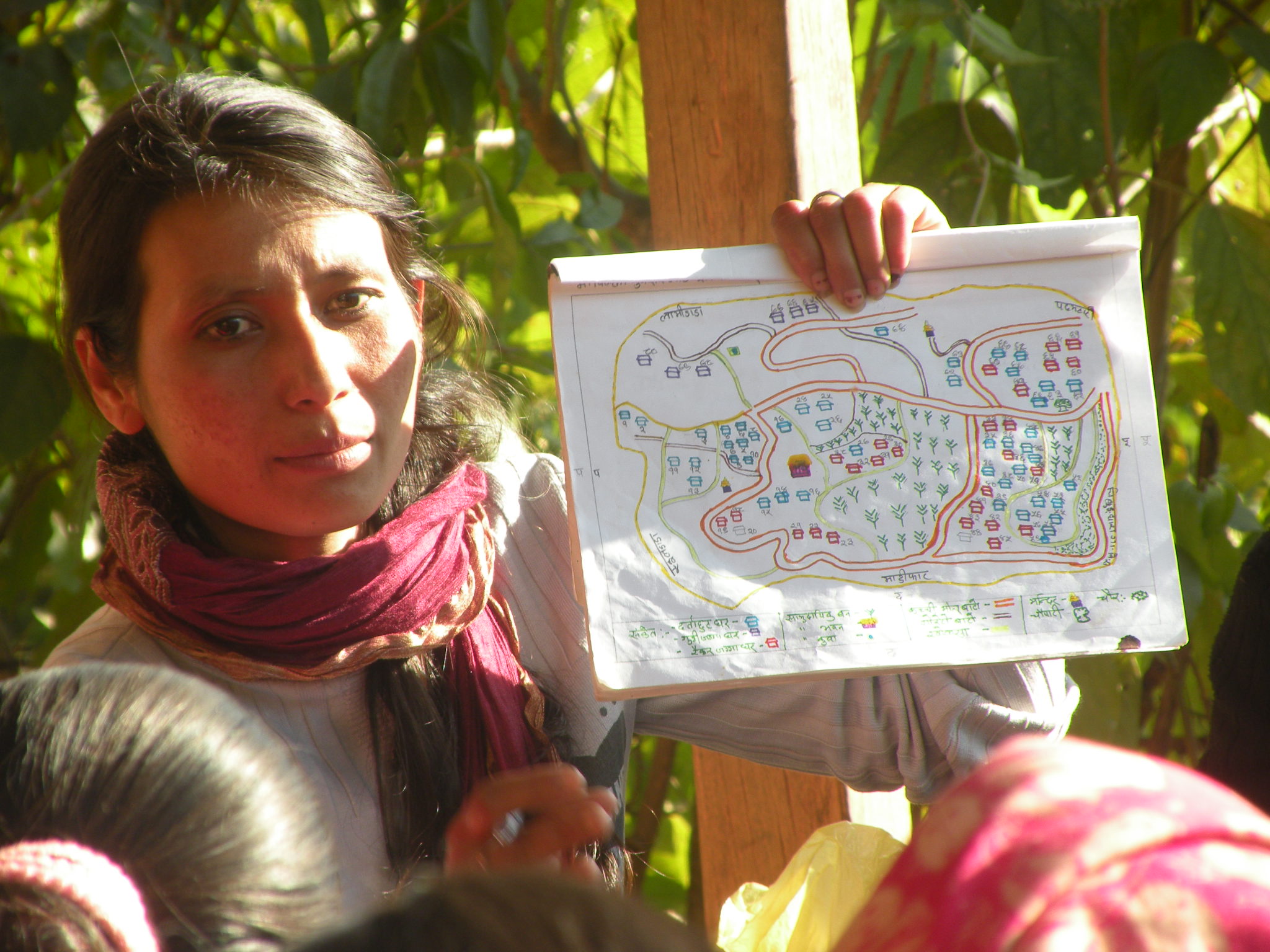
Through volunteering at Community Self Reliance Centre (CSRC), a 20 year old Nepali NGO working in the areas of land and agrarian reform, women’s empowerment opportunities and livelihoods, I’m learning about effective development approaches.   At CSRC we work with those who are landless and help them advocate for their rights in obtaining land certificates.  Most recently I was able to meet with a number of CSRC supported Cooperatives and Village Land Rights Forum (VLRF) members in Mahottari, Saptari and Siraha Districts.  VLRF’s are the ground level bodies that are the basis for the land rights movement in Nepal.  My objective was to learn and determine how I can facilitate assisting people in rural Nepal with their livelihoods, i.e. connecting corporates, government programmes/schemes and potential collaborating NGOS/INGOs with VLRFs and Cooperatives.   The reality is that livelihoods are only one part of a necessary holistic approach to working with villagers. 

I need to connect with people experientially, enabling me to be more passionate about my work.  I can never truly be in another person’s skin in Nepal, given the fact that I grew up in the US.  But first hand experiences do lead me to be much more empathetic.

The meetings mostly took place outdoors, sitting on a covering on the ground.  At CSRC we have a strong focus on women and gender and this was evident from the meeting attendees.  Owning land in Nepal is at the base of a complicated development process.  Some of the members that I met were farming “leased” government fallow land, which is a good modality for providing this basic resource to the landless, especially in an agrarian society.  Complementary to this is how to make the best use of forest land through collaboration with Community Forest User Groups (CFUGs), of which some of the VLRF’s are already associated.   Many members were performing daily wage labor, e.g. crushing rock and/or agricultural work in order to feed their children, however,  men were generally earning more than women, while some payments were made only through six kilograms of rice, approximately NR 90.  Others were working as tenant farmers in which case they had to give 50% of what they farmed to the landlord. 

Cooperatives are a very effective means for saving money and in turn making micro loans to members.  At CSRC we have 2600 VLRF’s, but only approximately 63 cooperatives, presenting a great opportunity.   Livestock, goats and buffalo, are extremely important, but I found that some members didn’t own any, putting them at a major disadvantage, in terms of livelihoods and the ability to consistently provide nutritious food for their families. 

Government funding and in-kind contributions through such bodies as Ward Development Funds, VDC’s, District Soil Conservation Centres and District Agricultural Offices, is a positive way to connect with civil society organisations.  Some of the Cooperatives and VLRFs were taking advantage of these opportunities.  Further development of CSRC’s front line leaders/activists needs to occur in order to assist the groups that they’re working with, to collaborate with these government partners.

The reality of village life is that projects needs to be holistic and include health, education and livelihoods components with a focus on gender issues.  Homes need to have solar panels, rain water needs to be harvested and stoves that don’t depend on firewood, need to be used.  Collecting firewood takes an inordinate amount of time to collect as the forest is usually some walking distance.  Access to basic healthcare needs to be provided, along with toilets.  Further awareness and practice needs to occur regarding enabling women and men to equally share household responsibilities and to allow women input on all decisions.  It is also vital that children have access to positive learning environments and that parents understand the importance of keeping both sons and daughters in school to the point of obtaining an SLC. 
The members that I met expressed a need for community shops so that they could get their basic necessities in their village.  They also wanted to do poultry, pig, buffalo and goat farming, sewing, leaf plate production, developing a village market place, as well as other ideas. 

In order to adequately engage in holistic development it comes down to the government, civil society organisations, including INGOs/NGOs, and corporates working together to  assist rural Nepal in obtaining an adequate share of resources and ensuring that children have as much opportunity as those living in urban areas.  Organisations with expertise in one area, e.g. health, must work collaboratively and seek out partnerships with those working in, e.g. education, livelihoods, land rights, etc.  My field visit has experientially shown me that we cannot work in silos, if people are to be given hope that things will be better for future generations. 


Sunday, March 10, 2013

My Uncle Alan-A Life Remembered


I walked past a number of funeral pyres at Pashupatinath and stopped and stood to the side of one in which I saw a body being cremated.  I gazed quite intently at the shroud being consumed by fire.  There seemed to be nothing else in the world as my mind was focused only on the moment.


When I returned to my flat I found out, on Facebook, that my father’s youngest brother, Alan Rosenkranz, was no more at the age of 70, after an 11 year battle with cancer.  Alan had tried all kinds of drugs and therapies to try to rid himself of the cancer that would ultimately take away his body and his life. 

Alan was only 14 years older than me and as a youngster I idolized him. He lived in New York and was married to Rose, and was in a partnership with his father, my grandfather, in a manufacturing business, employing 75 people at its peak.  I don’t know if this was really what Alan wanted to do with his professional life, but he took it upon himself to grow the company.

When I was growing up, Alan would come to Los Angeles and teach me about rock n roll, which he loved, and take me to baseball games.  I would always bawl my head off when he left to return to his home in New York.  When I visited him as a teenager, I remember trying to copy his somewhat, what seemed to me, angry demeanor, just wanting to be more like him. I remember his home on Long Island, which always seemed pretty incredible and full of really cool stuff.  I was able to spend an entire summer with Alan and his family when I was in graduate school.  Alan always seemed very young to me, a child in a man’s body, but in a very good sense. 

I have a really strong memory of attending, with Alan, a Yankees-Angles doubleheader in the Bronx, when my family was visiting New York.  I must have been maybe 7 or 8 and the fans in right field were calling the name of Angels outfield Willie Smith to the point where he had to be moved to left. I remember returning that evening to my grandfather’s home and being in awe of a thunderstorm as I was trying to go to sleep, something I hadn’t experienced growing up in California. 

Two other episodes that stand out for me.  The first was when I first came east to attend graduate school and I went to Alan and Rose’s home to visit and buy some winter clothes.  They took me shopping for my very first down jacket, which I ended up wearing in October during a few snowflakes.  My friend Bill, who was from New York, was only wearing a vest and a shirt.  As he saw me approach he could only laugh at how bundled up I was.  The second episode dealt with Alan and Rose hosting an engagement, i.e. a getting to know one another, party.  It was very kind and I remember how happy Alan was. 

I don’t know whether Alan ever did anything extraordinary in his life, most people don’t, something to be remembered by the masses.  But he did lead quite an incredible life, at least what I know of it, from the time that he was an infant.  When Alan was only two months old his mother passed away and he was placed in a home for one year, until my grandfather found another wife to care for his young family.   My father and another uncle, who were also quite young at the time, were taken care of by friends, while my grandfather worked to support them all.  I never was able to speak with Alan about how this all might have impacted him, but I’m not sure that he really wanted to speak of it. 

Alan’s only son Howard posted the following on Facebook, “he remained just as active and anxious and energetic and optimistic and vain and kind and stubborn and humble until the very end and I'll miss all of those things that made him who he was for the rest of my life”. 

My feeling is that my cousin’s statement is what made Alan extraordinary for those that knew and loved him.  Alan went to great lengths to take care of himself, exercising regularly until his body could no longer handle this.  He worked trying to build a business, after his manufacturing business moved to Pennsylvania, failed, and was somewhat rebuilt on a smaller scale by Howard and Alan. He did have tremendous energy and although we drifted apart during later years, whenever I spoke with him, I could feel his strength and vibrancy, whether it be talking about sports or world issues or family.  He did love to talk to everyone, an extrovert.  I’m not sure that he totally understood me, but who really understands others, but I felt his appreciation and interest, as he seemed to soften his approach towards life.  As I recollect he did always live his life outloud!

One could also see his extraordinariness from the fact that he helped to raise a daughter Michelle, who is a strong woman in both her professional and personal life.  Alan and his wife Rose were fortunate to have five grandchildren. 

Alan has had a definite impact on my life, mainly because he showed so much interest in my formative years.  My love of music and sports, which Alan helped to nurture, are two things that remain important in my life,.  Alan led a complete life and although it was cut short, he will live on for generations, similar to the ashes that I watched flowing into the Bagmati and eventually into the Ganga. 


http://obits.dignitymemorial.com/dignity-memorial/obituary.aspx?n=Alan-Rosenkranz&lc=4129&pid=163536714&mid=5453085

Friday, March 8, 2013

Nepal's Female Activists Show the Need for International Action on Gender


On International Women's Day I will be celebrating the many women I have met in Nepal who are challenging inequality by fighting for their rights. I am volunteering with international development charity VSO to help women from poor and isolated communities own the land they work on.
I work with an organisation which is fighting for agrarian reform, women's empowerment and better economic opportunities. The Community Self-Reliance Centre (CSRC) represents over 200,000 Nepalese landless people and tenant farmers, many of them women, who have farmed their lands for generations but still have to hand over a portion of what they grow to powerful elites that own their plots. This is because they don't have the certification giving them a legal right over the land they use to support themselves.
Despite providing much of the agricultural labour force, only 10.83% of women own land. They are often single-handedly responsible for caring for children while the men in their families go to earn money abroad due to a lack of opportunities in Nepal. Many women see land ownership as a key tool by which they can gain stability and have a real say in decision-making. As advocated for by CSRC, in 2010 the Nepal Government made it possible for women to receive joint land ownership certificates, which is helping to increase land rights for women, but progress is slow.
Achieving gender equality in Nepal will require a shift in the power structure of the country, and it will not be easy. The government voices support for land reform, but implementation of this commitment is a gigantic task. CSRC is organising sit-ins and advocacy work in order to convince elites that providing land, even for subsistence farming, is the best way to avert social unrest.
I recently visited one of CSRC's 2,600 Village Land Rights Forums (VLRFs) which comprise the land rights movement throughout Nepal. I met Shreelaxmi and her colleague Omkala, two women who are leading the fight for farmers in Palpa District. They are very committed to the cause, both working long hours and even resorting to sleeping at their office when they can't come home to their families. CSRC's focus on involving women in the land rights issue has produced many strong female activists who are determined to help the landless in Nepal.
2013-03-01-Shree2.JPG

Female activists leading the fight for land rights in Nepal: Shreelaxmi addressing one of the Village Land Rights Forums (VLRFs)
Shreelaxmi and Omkala are unmarried, which is somewhat unusual for women of their age in Nepal. They are also unusual in that they are grappling with an issue where men have traditionally made the key decisions. Shreelaxmi, Omkala and others like them in the land rights movement are challenging patriarchal assumptions and the idea that women should be treated as property. Through the VLRFs, women are able to express themselves and draw attention to the issues directly impacting them and their families, especially young girls.
Grassroots movements like these do promote gender equality, but they must be matched by international pressure on states to do more to ensure women have influence over their lives and in their communities. Discussions around the framework to replace the Millennium Development Goals will intensify this year, and VSO is campaigning for a strengthened stand-alone goal on women's empowerment to solidify international resolve on the issue. This should include targets on female representation, which will strengthen the presence of women in decision-making. Just as important are measures that account for women's experience of discrimination, which reaches out to grassroots movements like the land rights movement in Nepal, and includes them in reporting on the progress of women's equality.
http://www.huffingtonpost.co.uk/michael-rosenkrantz/international-womens-day-female-activists-nepal_b_2788223.html?utm_hp_ref=uk

I-MAN finds out about Eprat’s 100%


I-MAN wanted to spend time with friends, because he never really knew what might happen, but felt that he would be safe.  He ended up spending some time with Eprat who told him about how being with a certain person made her feel 100%.  I-MAN wondered what this really meant, i.e. feeling 100%.  Eprat explained that she mostly felt pretty good about life and what she was doing, but that this other person had the magic of making her feel even more.  I-MAN was quite curious about this and listened quite intently as Eprat explained things further, and he began to understand the meaning, although needed to see it in practice. 

As I-MAN thought more and more about this statement a woman with flowing gowns came to see I-MAN’s friend and confident, a Mr. Sweet, and started querying him about the size and shape of I-MAN’s pockets on his favorite pants, wanting to know how deep they actually were and did they contain any plane tickets to the promised land, which given Mr. Sweet’s knack for knowing that something was fishy, only made him smile, while speaking in numerous tongues, without providing a single answer. 

When I-MAN came back to the room that was being shared by Mr. Sweet, I-MAN and another person who spoke only in laughs, but sometimes getting rather silly, threatening to cut off people’s big toes on their left foot when they were drinking Sprite, I-MAN could sense that something was brewing.  Mr. Sweet explained that he thought he and I-MAN might be able to get a number of cows, approximately 10  and maybe  60 goats, if I-MAN could produce at least two tickets to the promised land and would reveal the depths of his pockets on his favorite pants.  With this as context, I-MAN began to think quite hard about Eprat’s 100% and felt surely that the scenario that Mr. Sweet described was in direct contradiction to what he had heard earlier in the day. 

The next day the flowing gown woman approached both I-MAN and  Mr. Sweet to potentially discuss what Mr. Sweet had spoken about to I-MAN.  Fortunately Mr. Sweet was busy but I-MAN decided that he would talk to the flowing gown woman with as much kindness as possible.  After all, the flowing gown woman only wanted what was best for I-MAN, sort of.  The woman explained that if I-MAN really wanted to raise cows and goats that he needed to produce the tickets as well as very deep pockets.  I-MAN explained that his pockets were not very deep and that he had no plane tickets, as he thought that he had already reached the promised land.  Dejectedly the woman walked away, leaving I-MAN only to wonder where he might ever get  cows and goats.

I-MAN still thinking about 100% then noticed a couple of people, who seemed to be doing some kind of dance, using rather large rubber bands to garner each other’s attention.  This seemed to be working and I-MAN again began to understand 100%, leaving himself with a very good feeling.

Once he was back home I-MAN met up with another friend and was told that there would be an arranged meeting, where if I-MAN would agree, he could drink as much hot, sweet, lemon water as possible.  I-MAN liking the sweet stuff agreed to the arranged meeting at approximately 4 PM, although things didn’t really happen until 5 PM.  As I-MAN noticed a number of people casually walking into the place where he was drinking the hot, sweet, lemon water, he also saw a number of animals like chimps, snakes, elephants, camels, bear and birds trailing behind the people. 

I-MAN being quite curious was wondering more and more about the arranged meeting.  I-MAN’s friend explained that the arrangement would be for I-MAN to choose an animal to live with and that he might, if he chose correctly, learn quite a bit about an animal’s life.  Unfortunately I-MAN couldn’t choose as he needed lots of time and conversation about which might be the correct animal.  He also knew that he must pay attention to Eprat’s 100% and that this might truly take some time to really comprehend.  Given his preference for living in slow places, I-MAN would only allow himself to be patient and choose correctly when the appropriate 100%er came along.  

Saturday, February 16, 2013

Corporate Social Responsibility


Corporate Social Responsibility in Nepal
By Michael Rosenkrantz[1]

"Corporate Social Responsibility is the continuing commitment by business to contribute to economic development while improving the quality of life of the workforce and their families as well as of the community and society at large."
World Business Council for Sustainable Development

Through my work with VSO and Community Self Reliance Centre (CSRC) I’ve had the opportunity to explore and hopefully build and encourage further dialogue/implementation of strategic Corporate Social Responsibility (CSR) in Nepal.  I’ve visited numerous corporates in trying to get a handle on people’s understanding regarding their definition of CSR.  What I’ve found is a mixed bag, in which some people’s understanding is  that CSR is about corporate philanthropy, a photo opportunity and some positive publicity about a monetary or in-kind donation, while others are trying to incorporate sustainable CSR into their corporate objectives and making this part of their corporate culture,  as reflected in a vision or mission statement. 
In my initial meeting with corporates I explain that CSR is about building partnerships, in which all parties can mutually benefit.  CSR is about impact, value for money and positive change in society.  It is not a short term activity, but is about strategic investment and has to benefit and be integrated into core business objectives in order to be effective.  CSR is about innovation and taking advantage of opportunities.
Strategically focused businesses have specific core objectives, typically looking to grow to maximize profits for the business and shareholders.  Some businesses in Nepal are starting to realize how partnering with NGOs who are working with specific communities, can help them in furthering their core objectives. This is indicated by the types of CSR activities and investments that are being made.   Corporates are also beginning to realize how much sense a triple bottom line, i.e. people, profits and planet can make for growing their business.  As consumers become better educated, they want to know that businesses treat their employees well and how the manufacturing of specific products and/or services impacts the planet. 


CSR is about investing, which doesn’t have to be about money, but can be conducted through the use of human resources, value chains, infrastructure and other business expertise.  CSR activities do have to be well thought out as shareholders and management will want to ensure a positive Return on Investment.  This means positive impact and outcomes, in which a societal change is made in whatever thematic areas fit in with core business objectives. 

As indicated in the paper: Corporate Social Responsibility in Nepal: A Chance for Peace and Prosperity? Report based upon a Mission to Nepal in November 2006 by Caroline Welzel Butzbacherstr.  CSR is not about how a company spends its income but rather about how it generates that income.  In Nepal CSR can very much be about helping to stabilize the peace process.

Continuing well thought out, strategically focused, CSR activities time has come in Nepal.  It no longer is just about doing a good deed because somebody wants to give to those considered to be “less fortunate”, although this is as good a reason as any.  CSR is about working with those who may be outside of the mainstream and, e.g. developing livelihood opportunities, so that people don’t have to migrate, developing programs that keep children, especially females in school, so that they can obtain, at least a SLC, or providing health facilities in order for women to be protected in reproductive health issues or bringing about an inclusive society and so much more.   Business is the driver, but needs to partner in order to continue to develop new markets and  be sustainable.


[1] Michael Rosenkrantz is a VSO volunteer working at both VSO Nepal and Community Self-Reliance Centre, a land rights and agrarian reform NGO, in the field of corporate social responsibility.  Michael is from Los Angeles, California and plays and coaches basketball in Nepal on a regular basis.  He has an MBA from Northeastern University in Boston, an MA Sociology from Boston College and a BA-Political Science from the University of California, Irvine, with 30 years of work experience in the US, India and Nepal.  

Reasonable Accommodation


Reasonable Accommodation
By Michael Rosenkrantz[1]
“A reasonable accommodation is an adjustment made in a system to "accommodate" or make fair the same system for an individual based on a proven need. Accommodations can be religious, academic, or employment related and are often mandated by law. Each country has its own system of reasonable accommodations.

From April 2009-February 2012, I worked as a VSO volunteer for the Indian Government at the National Trust (NT), Ministry of Social Justice and Empowerment, in the field of developmental disabilities.  NT was established by an Act of Parliament in 1999 and was led by Chairwoman Poonam Natarajan, whose only child had been born with multiple disabilities, and who is a very strong advocate for the rights of Persons with Disability as per the UN Convention.  NT took a holistic approach towards working with Persons with Disability and had a range of schemes and programmes from early intervention and education, to housing, to vocational training, etc. in establishing a more inclusive society.  Given the population of India and the fact that between 6-10%[2] of any country’s population includes  Persons with Disability, even though NT was working only with NGOs in the developmental disability field, the organisation still  had a huge mandate.   As I learned about physical disabilities, a person’s body might be impacted but typically their mind was fine.  Even a person with intellectual disability was able, up to a point and depending on the severity, to perform certain job functions, but there might not have been “reasonable accommodation” enabling gainful employment.
Growing up in the US I was aware of the American with Disabilities Act (ADA) through a plethora of curb cuts for wheelchairs, accessible buildings and reasonable accommodation in the workplace.  This was all integrated and part of the culture.  The ADA Title II provides that “no qualified individual with a disability shall, by reason of such disability, be excluded from participation in or be denied the benefits of the services, programs, or activities of a public entity, or be subject to discrimination by any such entity.”  The US Department of Justice defines a reasonable accommodation as "any modification or adjustment to a job or the work environment that will enable a qualified applicant or employee with a disability to participate in the application process or to perform essential job functions. Reasonable accommodation also includes adjustments to assure that a qualified individual with a disability has rights and privileges in employment equal to those of employees without disabilities."

The UN Convention on the Rights of Persons with Disability states: “Reasonable accommodation” means necessary and appropriate modification and adjustments not imposing a disproportionate or undue burden, where needed in a particular case, to ensure to persons with disabilities the enjoyment or exercise on an equal basis with others of all human rights and fundamental freedoms.
During December 2012 the first “Career Expo for Persons with Disability” was held in Nepal.  As I noted the many people lining up to provide their CVs, I saw a great interest in finding work.  The overall question though was how many employers in Nepal provide “reasonable accommodation”?

As noted in the sidebar to this article, the National Centre for the Promotion of Employment for Disabled People (http://www.ncpedp.org/), whose Director Javed Abidi, an Ashoka Fellow, is a major advocate in India, there are numerous ways for a company  to become disabled friendly.  It does however take commitment from management to incorporate reasonable accommodation into the culture and to make it a  priority to recruit, hire and train Persons with Disability. 

I do my best to be an optimist. But in no way would I consider myself to be so Polyanna to think that reasonable accommodation will happen quickly in the workplace, especially given the huge issues that Nepal is facing.  I do however feel that given the number of Persons with Disability in Nepal, who most likely are not working up to their potential, that this is wasted human resources.  I was recently reminded of this as I was talking to a 25 year old FB friend who is a Person with Disability, with a BA degree,  who told me that he doesn’t get out of the house much.  This only begs the question, as to why a person with a BA degree is not in the workplace, making things better for the nation.  Most likely this is about “reasonable accommodation”.    


Are you a disability-friendly company] ?
You can become a disabled-friendly company by following these simple rules:
1.     Description: Visual of disability-friendly corporate logo symbolising the synergy between the disability and the corporate sectorInculcating a positive attitude towards people with disabilities and following non-discriminatory employment practices.
2.     Reserving a percentage of jobs at all appropriate levels for disabled persons.
3.     Including disability in the Mission Statement of the company. Different departments (HRD, Finance, R&D, Administration, etc) should have clear cut objectives to support people with disabilities.
4.     Formalising a policy to retain employment without reduction of rank of people who may become disabled.
5.     Being accessible not only to people with mobility problems but also those with visual and hearing impairments, for example barrier-free buildings, ramps, adapted toilets, Braille symbols and auditory signals in lifts, signage, etc.
6.     Providing appropriate aids/technology/attendants to support disabled employees in the workplace.
7.     Extending certain extra benefits like providing transport to work, rights to special leave, additional medical allowance, etc, to people with disabilities/ partners of disabled persons/or parents of disabled children.
8.     Not denying promotion to people with disabilities on grounds of disability.
9.     Creating a safe working environment to prevent health hazards and accidents.
10. Conducting regular orientation programmes for all the staff members/workers to encourage positive relations between disabled and non-disabled employees.
11. Stocking the latest information in the library pertaining to disability.
12. Providing opportunity for training in skill development for disabled persons.
13. Furnishing credit and support to persons with disabilities and promoting self-employment.
14. Being a marketing outlet for the products made by disabled persons/disability NGOs.
15. Sub-contracting/outsourcing activities to people with disabilities.
16. Participating in awareness-raising campaigns to sensitise the public.
17. Acting as a role model to educate and motivate other employers to follow suit.
18. Providing consultancy services to NGOs working in the area of production, management, marketing, entrepreneurial skills, etc.
19. Funding/sponsoring/donating to NGOs which are working for the cause of disability.
20. Supporting the government to establish and maintain support systems for disabled persons.


[1] Michael Rosenkrantz is a VSO volunteer working in the field of Corporate Social Responsibility (CSR).  He also tries to advocate for Persons with Disability by raising awareness through wheelchair sports in Nepal. 
[2] The 2011 India census trained enumerators to capture data on a very detailed question regarding Persons with Disability. 


Kirtipur Cup Basketball Tournament 2069-Nepal Basketball


I’ve had a love affair with basketball for 50 years.  I just can’t get enough of the sport and participate wherever I live.  In Nepal I’ve found basketball through coaching an Army Wheelchair Basketball team, playing in a number of locations and conducting a three hour session for school age children called “Life Lessons from Basketball”.  But I’ve also found the real Nepal Basketball through my friend and coach of the  Men’s National Team,  Dinesh Nakarmi. 
Dinesh is someone who also has a deep love for the game but especially for growing the sport in Nepal.  Given Dinesh’s experience he has the potential for opportunities in other countries but he only wants to make basketball successful in Nepal.  I very much admire that in him, given all of the politics that I’ve found in the sporting world.
Towards growing the game Dinesh is the General Secretary of the National Sports Council program to further develop school basketball.  (The President is Yuvraj Sharma, Chief Executive and Director of Whitehouse College)  This is truly great and will hopefully help to develop young Nepali boys and girls and provide them with a means to stay emotionally and physically healthy throughout their entire lives by playing sports, eating well and continuing their education. 
Recently Dinesh and the Naya Bazar Club (NBC) an NGO Community Based Organization (CBO) dedicated to helping society through mobilization of youth, organised the Kirtipur Cup Basketball Tournament 2069.  Since its inception NBC has been involved in many sports activities, including basketball, football, table tennis and volleyball.  
The purpose of the league, which includes six teams, i.e. Naya Bazar Club, NASA Club, Goldengate Club, Gurukul National Foundation, Whitehouse and Tribhuvan Army Club, is to:       

·         Improve the standard of national basketball;
·         Increase the popularity of this game;
·         Encourage and to provide opportunity for young people to participate in sports;
·         Improve players, coaches and referees;
·         Arouse  the public interest which will generate the necessary investments.

I attended the first series of matches, two games with another  being rained out, on February 16 and was not disappointed.  Some of the players I had seen before as they are on the Men’s National Team, however they were divided among the six teams.  One of the teams didn’t have a coach and I helped them during the second half, although they ultimately lost. 

My feeling is that it is vital for this type of tournament and school basketball programs to occur, if the sport is to become more popular.  But there is much more to it, as basketball  lessons abound for life, including teamwork, commitment, leadership, discipline, opportunities, as well as many others.

 There also is the question of proper infrastructure, which at this point is difficult to find.  Although the court that I saw on February 16 was very well maintained, most of the courts, including those that I play on are sub-par, very slippery, dangerous, without proper baskets.   Additionally the majority of courts are outside, so that when there is inclement weather there is no playing. 
As I found from coaching in India for three years, basketball  can be an equalizer.  It is very important that girls and women are given the same opportunities as boys and men to participate in basketball, i.e. whenever there is tournament, it should include competitions for everyone.   It is also important to treat all fans the same and allow everyone to sit together to cheer for their favorite players and teams.   This will also help to grow the game.

I’m very encouraged by what I’ve seen during my eight months in Nepal.  My hope is that the love of basketball will continue to grow among the general populous and that more people will play, no matter what level of expertise they have.  But further I hope that everyone, young and old will participate in any sport which they enjoy in order to keep themselves healthy throughout their lives. 

For further information about the Tournament, please go to:  http://nbc.org.np/kbl/index.htm